

Artificial intelligence has irreversibly worked its way into the creative process. Business owners can now generate trending logo design concepts in seconds, draft a dozen taglines before their coffee gets cold, or mock up a color palette with a single prompt. It is fast, inexpensive, and always available.
But speed is not the same as strategy. Finding a strong brand identity designer near you means connecting to real business goals, real customers, and a story only your company can tell. AI can support parts of that process. It can’t replace the thinking behind it.
Here is a clear look at where AI genuinely helps brand identity work, where it falls short, and how to use it without losing what makes your brand yours.
Where AI Speeds Up the Creative Process
Used well, AI is a research and exploration tool. It clears away some of the slower, more repetitive parts of early-stage creative work, freeing up time for the decisions that actually matter.
AI tends to be most useful for:
- Generating early visual concepts or mood boards to explore a general direction
- Drafting placeholder taglines, headlines, or brand voice samples to react to
- Producing color palette options based on a mood, industry, or audience
- Summarizing competitor messaging and visual trends for quick research
- Speeding up rough first drafts of internal brand documents
These outputs are a starting point, not a finished product. They give a creative team more material to react to and less time spent on blank-page work.
Where AI Falls Short
AI Doesn’t Know Your Business
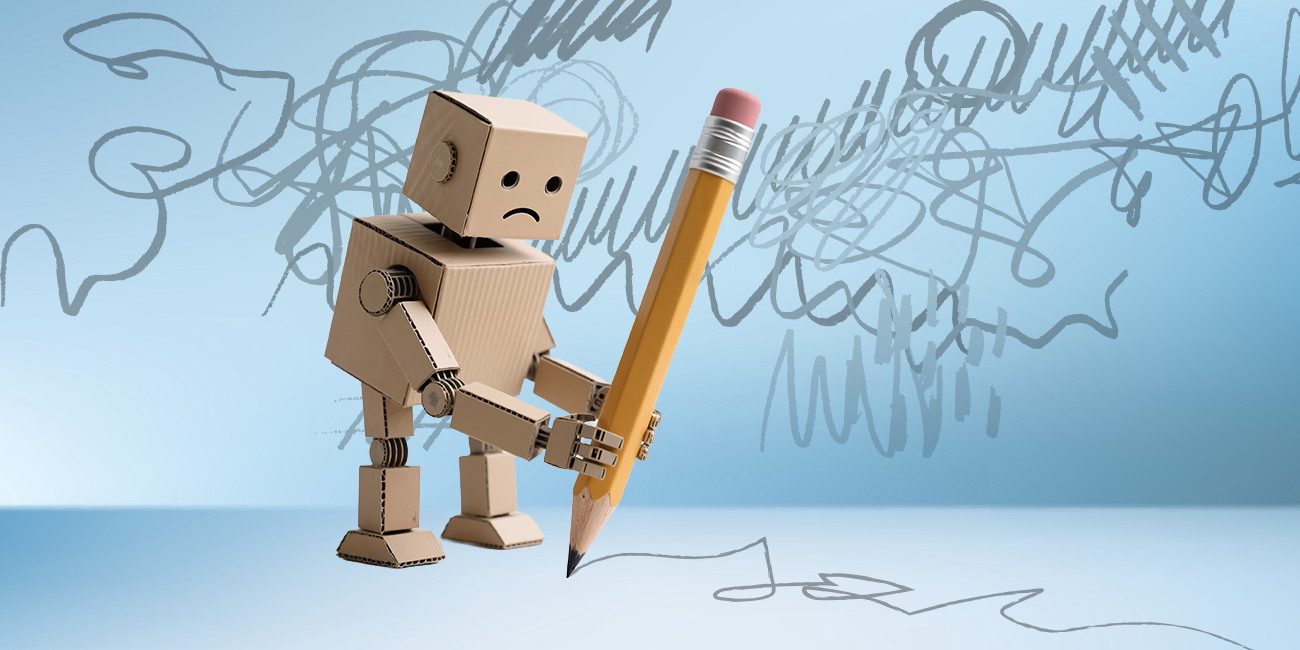
AI tools generate content by recognizing patterns across massive amounts of existing material. They have no knowledge of your specific customers, your competitive landscape, or the reasons your company exists in the first place. A brand identity built without that context tends to blend in with everyone else’s, which defeats the point of building one.
AI Can’t Make Strategic Trade-offs
Strong brand strategy means weighing trade-offs, including how much polish a visual identity needs to signal quality, and AI can’t make that call. Consumers are increasingly quick to spot the generic, overly intricate look of AI-generated assets, and the perception sticks. A logo that looks cut-rate can signal that the products or services behind it are cut-rate too, undermining the trust a brand identity should build.
Originality Gets Complicated
AI-generated logos and visuals are built from existing design work pulled across the internet. That raises real questions about originality, and a mark that looks close to an existing registered logo can create legal problems later. Reviewing AI output for originality is not optional; it is a necessary step before anything goes near a business card or a storefront sign.
Authenticity Dissonance
Audiences today can spot heavy reliance on AI-generated images, copy, and voice, and the reaction isn’t neutral. Content that feels artificial reads as a shortcut, and shortcuts read as reduced effort and lower quality. Worse, people can feel misled once they realize content they engaged with wasn’t genuinely made for them, turning what should build trust into something that feels manipulative, hollow, and like a waste of their time.
Consistency Still Requires a Person
Brand identity isn’t a single output. It is a system of colors, typography, imagery, and tone, applied consistently across a website, packaging, social media, and every other place a customer encounters the business. AI-generated assets often come out in the wrong file format or too low a resolution to actually use, especially for a logo that needs to scale from a favicon to a storefront sign. A designer still has to rebuild and adapt the concept before it becomes a real, production-ready system.
Where Human Strategy Still Leads
This is the part of brand identity work that AI can’t shortcut. A strategist asks why a business exists, who it actually serves, and what makes it different from the competitor down the street. That research shapes everything that follows, from the color palette to the tone of every headline.
What does a brand need to say to the person deciding whether to trust it? That question sits behind every strong brand identity, and answering it takes market knowledge, customer insight, and judgment that a generative tool simply doesn’t have.
This is also where an experienced creative partner adds the most value. Building a full brand identity involves translating strategy into a visual and verbal system that holds up across every touchpoint — something most AI tools were never built to handle on their own.
Using AI as a Tool, Not a Shortcut
The businesses getting the most out of AI right now aren’t using it to replace their creative process. They’re using it to speed up the parts that used to eat up time: early concepting, first-draft copy, quick competitor research.
The actual brand design work, the strategy behind a logo, the reasoning behind a color choice, the voice that carries across a website and every piece of marketing, still comes from people who understand branding and know how to turn AI-assisted drafts into something original and strategic. Our expert brand strategists bring that judgment to the table, along with the experience to know when an AI-generated concept is worth building on and when it needs to be set aside entirely.
The same holds true for trending logo designs. AI can generate dozens of options in minutes, but very few of them are ready to represent a real business without a designer’s eye reviewing composition, scalability, and originality.
AI can be a useful addition to the brand identity process. It is not a replacement for the strategy, story, and judgment that make a brand worth remembering.
Reach out to Pixelstrike’s team for brand strategy services based in Richmond that use AI tools responsibly.